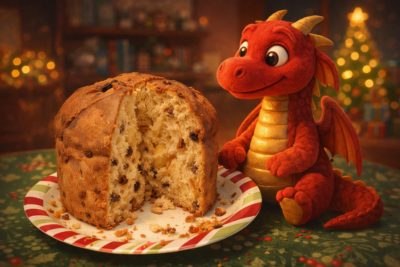
24 Days of Martin – Day 15: Fruitcake
Mom closed the oven door, wiped the flour off her hands, and set the timer for two hours. Humming while she washed her hands, pleased with herself for finally baking a fruitcake, Mom sat down to write an overdue letter to her Aunt Frances.
Dear Aunt Fran,
I hope this letter finds you happy and healthy! We are ready for the holiday season. Our tree is up and decorated. We’ve mailed our Christmas cards. And one of us can be found singing one Christmas carol or another every day. Lists have been made for final Christmas dinner shopping, and spare gift wrap paper is waiting for any last-minute gifts we need to grab.
But today, I wanted to write to you to tell you I finally did it. I baked a fruitcake! It’s not as elaborate as the ones you always bake; I just didn’t have enough time. But this was so easy, I’m going to make your recipe next year!
David and Martin have been researching sleighs and Russian sleds. Don’t ask—it’s a guy thing. But it got me thinking about fruitcake and its origins, so I thought I would do a little research myself.
Did you know fruitcake originated in Rome? All things lead to Rome, don’t they? Hahaha! Even funnier, the recipe was called ‘satura’, meaning a mixture of many things, which is where we get the word satire. Who knew? Anyway, it was originally made with pomegranate seeds, pine nuts, raisins, barley mash, and honeyed wine. It was used as an energy food for Roman soldiers and was a symbol of good luck (for the soldiers) and abundance (for the townspeople who stayed home).
Ancient Egypt and Ancient China also had fruitcakes. These cakes were very similar to the Roman fruitcakes. The Egyptians placed them in tombs for royalty to have a sweet experience in the afterlife. The Chinese used fruitcakes for celebrations, and their cakes symbolized wealth, longevity, and happiness.
Cakes started to taste a little better with the introduction of spices. During the Middle Ages, cinnamon, cloves, and nutmeg were added, as well as fruit preserved with honey and sugar. After baking, the cakes were soaked in alcohol such as rum and brandy, which acted as a natural preservative.
In Germany, Früchtebrot is the word for fruitcake and generally refers to a sweet, dark fruit-filled bread. In the 1400s, ‘Stollen’ was a fruit bread made with flour, oats, water, oil, yeast, nuts, spices, dried fruit, and candied fruit. They used oil during Advent because bakeries were not allowed to use butter due to the regulations of fasting. Oil was expensive and made from turnips. After several appeals, the Church granted permission for the use of butter in what was known as “The Butter Letter” of 1490. The most famous of all fruit breads, Dresden Stollen, was first mentioned in chronicles in 1474 and is still baked today! I include this part about the German Stollen for a couple of reasons:
- Can you imagine baking without butter?
- Can you imagine oil made from turnips?
- Can you imagine baking with an oil made from turnips?
I can’t wait to share this part with Martin tonight during dessert. For some reason, this year, he has become quite averse to all things German in relation to Christmas. We haven’t figured out why, and when we ask him, he just shrugs and says he doesn’t know.
Anyway, fruitcakes didn’t change much after the addition of spices. Queen Victoria had fruitcake as her wedding cake in 1840, starting the tradition of fruitcakes in English weddings. Guests would save a piece to take home, place under their pillows, and hope they would dream of their future spouse. Even Princess Diana and Prince William had fruitcake! Did you know that saving the top layer of your wedding cake to eat on your first anniversary started with fruitcake? In Victorian times, the top layer was removed to eat at the christening of the first child. Due to the preservation of the alcohol, the cake was still safe to eat—much easier than many layers of cling wrap stored in plasticware in the freezer!
During Queen Victoria’s reign, fruitcake also became a part of Christmas celebrations. The English called fruitcake “plum pudding.” Wandering Christmas carolers would be given plum pudding or figgy pudding as a thank you for their songs. This gifting of plum pudding inspired the song “We Wish You A Merry Christmas.”
Fruitcake does include symbolism and superstitions.
It symbolized abundance in the dead of winter with:
- Dried fruit = preserved summer
- Nuts = stored energy
- Spices = warmth
- Alcohol = preservation + cheer
Fruitcake was made at the start of winter, aged for weeks or months, and served during holidays when food was scarce.
Fruitcake superstitions show how effort, preparation, and foresight blended into myths and legends. Fruitcake was thought to:
- Bring good fortune.
- Strengthen bonds.
- Provide wealth (by saving and eating a piece on New Year’s).
- Deliver you home safe from a journey if you traveled with a fruitcake.
- Protect your family from hunger if a fruitcake was kept in the pantry.
Jokes and kidding aside, I do enjoy fruitcake, and David would eat it every day if he could. Here in America, it’s no longer a wedding tradition, but it does remain one of the most cherished of Christmas traditions.
I’m looking forward to trying this fruitcake tonight. And really excited about starting your fruitcake in January for our Christmas next year.
Many hugs and much love,
Ellain
PS from Martin: One Day Fruitcake Recipe


- 1
- 2